Disaster Management
DISASTER MANAGEMENT


Many people take disaster management casually until they are faced with the disaster themselves. Though things are improving and local governments are doing all they can to prepare for unexpected disasters, there will always be the need for outside support. The Catholic Connect Foundation has and will always help however it can to make sure disaster-affected persons get all the aid they need to restart their lives from scratch.

According to the International Federation of Red Cross & Red Crescent Societies Natural Disasters are naturally occurring physical phenomena caused either by rapid or slow onset events that have immediate impacts on human health and secondary impacts causing further death and suffering. These disasters can be
- Geophysical (e.g. Earthquakes, Landslides, Tsunamis and Volcanic Activity)
- Hydrological (e.g. Avalanches and Floods)
- Climatological (e.g. Extreme Temperatures, Drought and Wildfires)
- Meteorological (e.g. Cyclones and Storms/Wave Surges)
- Biological (e.g. Disease Epidemics and Insect/Animal Plagues)
The United Nations Office for Disaster Risk Reduction characteistics Natural Disasters in relation to their magnitude or intensity, speed of onset, duration and area of extent e.g. earthquakes are of short duration and usually affect a relatively small region whereas droughts are slow to develop and fade away and often affect large regions .
Man-Made Disasters
Man-Made Disasters as viewed by the International Federation of Red Cross & Red Crescent Societies are events that are caused by humans which occur in or close to human settlements often caused as a results of Environmental or Technological Emergencies. This can include :
- Environmental Degradation
- Pollution
- Accidents (e.g. Industrial, Technological and Transport usually involving the production, use or transport of hazardous materials)
Complex Emergencies
Some disasters can result from multiple hazards, or, more often, to a complex combination of both natural and man-made causes which involve a break-down of authority, looting and attacks on strategic installations, including conflict situations and war. These can include :
- Food Insecurity
- Epidemics
- Armed Conflicts
- Displaced Populations
According to ICRC these Complex Emergencies are typically characterized by:
- Extensive Violence
- Displacements of Populations
- Loss of Life
- Widespread Damage to both Societies and Economies
- Need for Large-scale, Humanitarian Assistance across Multiple Agencies
- Political and Military Constraints which impact or prevent Humanitarian Assistance
- Increased Security Risks for Humanitarian Relief Workers
Pandemic Emergencies
Pandemic (from Greek πᾶν pan "all" and δῆμος demos "people") is an epidemic of infectious disease that has spread across a large region, which can occur to the human population or animal population and may affect health and disrupt services leading to economic and social costs. It may be an unusual or unexpected increase in the number of cases of an infectious disease which already exists in a certain region or population or can also refer to the appearance of a significant number of cases of an infectious disease in a region or population that is usually free from that disease. Pandemic Emergencies may occur as a consequence of natural or man-made disasters. These have included the following epidemics:
- Ebola
- Zika
- Avian Flu
- Cholera
- Dengue Fever
- Malaria
- Yellow Fever
- Corona Virus disease
Aspects of Disaster Management
The International Federation of Red Cross & Red Crescent Societies defines disaster management as the organisation and management of resources and responsibilities for dealing with all the humanitarian aspects of emergencies, in particular preparedness, response and recovery in order to lessen the impact of disasters.
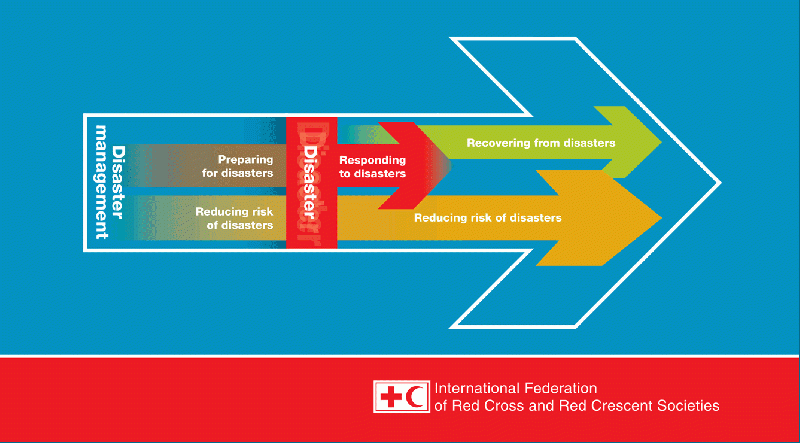
Disaster Prevention
"The outright avoidance of adverse impacts of hazards and related disasters "
UNISDR views Disaster Prevention as the concept of engaging in activities which intend to prevent or avoid potential adverse impacts through action taken in advance, activities designed to provide protection from the occurrence of disasters. WCPT similarly highlight that while not all disasters can be prevented, good risk management, evacuation plans, environmental planning and design standards can reduce risk of loss of life and injury mitigation. The HYOGO Framework was one such Global Plan for natural Disaster Risk Reduction, which was adopted in 2005 as a 10 year Global Plan, signed by agreement with 168 Governments which offered guiding principles, priorities for action and practical means for achieving disaster resilience for vulnerable communities.

Disaster Preparedness.
"The knowledge and capacities developed by governments, professional response and recovery organizations, communities and individuals to effectively anticipate, respond to, and recover from, the impacts of likely, imminent or current hazard events or conditions".
According to ICRC, Disaster Preparedness refers to measures taken to prepare for and reduce the effects of disasters, be they natural or man-made. This is achieved through research and planning in order to try to predict areas or regions that may be at risk of disaster and where possible prevent these from occurring and/or reduce the impact those disasters on the vulnerable populations that may be affected so they can effectively cope. Disaster preparedness activities embedded with risk reduction measures can prevent disaster situations and also result in saving maximum lives and livelihoods during any disaster situation, enabling the affected population to get back to normalcy within a short time period.
Minimisation of loss of life and damage to property through facilitation of effective disaster response and rehabilitation services when required. Preparedness is the main way of reducing the impact of disasters. Community-based preparedness and management should be a high priority in physical therapy practice management.
Disaster Response / Relief
"The provision of emergency services and public assistance during or immediately after a disaster in order to save lives, reduce health impacts, ensure public safety and meet the basic subsistence needs of the people affected".
Focused predominantly on immediate and short-term needs, the division between this response/relief stage and the subsequent recovery stage is not clear-cut. Some response actions, such as the supply of temporary housing and water supplies, may extend well into the recovery stage. Rescue from immediate danger and stabilization of the physical and emotional condition of survivors is the primary aims of disaster response/relief, which go hand in hand with the recovery of the dead and the restoration of essential services such as water and power .
Coordinated multi-agency response is vital to this stage of Disaster Management in order to reduce the impact of a disaster and its long-term results with relief activities including:
- Rescue
- Relocation
- Provision Food and Water
- Provision Emergency Health Care
- Prevention of Disease and Disability
- Repairing Vital Services e.g. Telecommunications, Transport
- Provision Temporary Shelter
Disaster Recovery
Vulnerability of communities often continues for long after the initial crisis is over. Disaster Recovery refers to those programmes which go beyond the provision of immediate relief to assist those who have suffered the full impact of a disaster and include the following activities:
- Rebuilding Infrastructure e.g. Homes, Schools, Hospitals, Roads
- Health Care and Rehabilitation
- Development Activities e.g. building human resources for health
- Development Policies and Practices to avoid or mitigate similar situations in future
How Physiotherapists Can Contribute
The WCPT provide advice on how physiotherapists can most effectively contribute in disaster situations highlighting the role for the profession in the aspects of disaster management described above.
Disaster Management Guidelines
When disasters strike, there is always a huge amount of goodwill from rehabilitation professionals around the world who wish to use their skills to support those affected. This brief guidance informs those who are considering responding internationally to a disaster either as individuals or as part of a team. It highlights key questions to consider before departing, whilst working in the disaster area and on returning home. Responses to these questions considered are presented as “Do’s and Dont's” which are exemplified by recommended practices and those to avoid in the real case studies below. The guidance note is not intended to be a step-by-step or technical guide, nor is it exhaustive, and does not supersede any specific guidance provided by your own global professional body. | |
A Guidance Document in simple language for health personnel, setting out their rights and responsibilities in conflict and other situations of violence. It explains how responsibilities and rights for health personnel can be derived from international humanitarian law, human rights law and medical ethics. The document gives practical guidance on:
| |
Rehabilitation in Sudden Onset Disasters. The role of rehabilitation professionals in responding to sudden onset disasters, such as earthquakes or tsunamis, is evolving rapidly and they increasingly find themselves at the forefront of emergency response teams. This manual is designed for Physiotherapists and Occupational Therapists who provide rehabilitation in the immediate aftermath of a sudden onset disaster. It was developed to support volunteers on the UK International Emergency Trauma Register but with the aim of being relevant to all rehabilitation professionals interested in rapid deployment to austere environments. | |
Minimum Technical Standards and Recommendations for Rehabilitation: Emergency Medical Teams This document is the result of collaboration between a working group of rehabilitation experts convened by WHO and external consultations. It is thus based on collective experience in rehabilitation during responses to recent large-scale emergencies and also on published data. In time, the minimum standards for rehabilitation in emergencies will be part of a broader series of publications based on the Classification and minimum standards for foreign medical teams in sudden onset disaster. The purpose of this document is to extend these standards for physical rehabilitation and provide guidance to Emergency Medical Teams (EMTs) on building or strengthening their capacity for and work in rehabilitation within defined coordination mechanisms. The standards and recommendations given in this document will ensure that EMTs, both national and international, will better prevent patient complications and ensuing impairment and ensure a continuum of care beyond their departure from the affected area. | |
Communicable Disease Control in Emergencies - A Field Manual This manual is intended to help health professionals and public health coordinators working in emergency situations prevent, detect and control the major communicable diseases encountered by affected populations. | |
Management of Limb Injuries in Disater and Conflict - A Field Manual The WHO Emergency Medical Team (EMT) Initiative helps countries and NGOs to set up teams that will be able to maintain agreed standards of quality and self-sufficiency, resulting in better patient care. With more teams striving to reach these standards, clear guidance on best practice is needed, particularly for managing patients with limb injuries, which make up the majority of cases. The consensus-based Field Guide—Management of Limb Injuries during disasters and conflicts and the complementary open-access online resources gathered here are aimed at providing that guidance. It draws on the expertise of the International Committee of the Red Cross, which has a long history of delivering care to patients and protecting them in conflict. This field guide will be regularly updated as new controversies are raised and evidence grows. In August 2018,Kerala was hit by incessant rains followed by one of the worst floods that the state has witnessed in decades. All the dams of the state were filled to capacity and gates had to be opened to keep the dams safe. Hundreds died and thousands of homes were affected and damaged. More than a million people had to take shelter in relief camps. Normal life came to a standstill. The heavy rain acted as a trigger for more than 600 landslides in the state. The entire nation came forward to lend a helping hand to the Kerala flood victims. Central Government, State Governments, Union Territories, Multi National Corporations, Big Business Houses, Celebrities, Sportsmen and women, schools, colleges, and common people have contributed to Kerala’s Chief Minister’s Relief Fund generously. Apart from these generous donations, it was the local community coming together for rescue missions and volunteering in relief camps that had an enormous impact on the return to normalcy. Awareness and preparedness are the most effective prevention and mitigation measures against all disasters. Prevention Of Natural disasters Floods and Landslides being the most common natural disaster in the state, prevention methods of floods and landslides can be categorised into three. •Vegetative measures: Preserving vegetation, grasses and trees can minimize the amount of water infiltrating into the soil, slow the erosion caused by surface-water flow, and remove water from the soil. •Structural Measures: Retaining and Diverting water using dams, floodplains, levees etc. Constructing piles & retention walls Improving surface & subsurface drainage Rock-fall protection •Management measures: Integrated river basin approach Public awareness, participation and insurance Land use zoning & risk assessment Flood forecasting and warning systems However, it is impossible to be prepared for any kind of disaster since it is impossible to predict or foresee it. The Corona Pandemic took the world by surprise. There may occur many more kinds of disasters that may require the community and state to respond to differently. Community Contingency Plan  Prepare: Planning should be specific to each context and take into consideration a number of factors including: the government’s disaster-response plans and capacity; reception and coordination of national, regional or global inputs; potential sources of donor support; the likelihood of disaster occurrence; and the vulnerability of the population. Analyse: Determining the risk of disaster to a population and its potential impact starts with an analysis of the likely hazards faced by a country or region. Once this has been done an assessment of vulnerabilities and capacities at local, national or regional levels can be undertaken. Develop: Based on the analysis, this step understands what the organisation has to do in response to the disaster which includes who needs to do what, when and where and what they will need to enable them to do it. Implement: Practising the plan, will help organizations and communities understand its main elements, and will help planners see what works and what doesn’t. Review: Keeping the disaster-response or contingency plan current and relevant is a challenging task, but can be achieved by scheduling regular reviews. The plan should specify the frequency of such reviews and the persons responsible for this. State control rooms: The control rooms of the two above-mentioned departments function under the administrative control of the respective Department Heads, they being Commissioner Land Revenue and the Director-General of Police, respectively. The Control Rooms of Revenue and Home function 24 hours. The Department of Fisheries operates a 24 x 7 control room in their headquarters and all districts to coordinate during fishing vessel accidents that frequently occur in the sea. Man made disasters: Disasters that are caused by human beings are called man-made disasters. Examples are nuclear bombs, transportation accidents etc. The most serious threats occur due to nuclear, biological and chemical warfare which are collectively known as WMD or Weapons of Mass Destruction.  Nuclear Weapons: Nuclear weapons are the most dangerous weapons on earth. One can destroy a whole city, potentially killing millions, and jeopardizing the natural environment and lives of future generations through its long-term catastrophic effects. The dangers from such weapons arise from their very existence. Although nuclear weapons have only been used twice in warfare—in the bombings of Hiroshima and Nagasaki in 1945—about 13,400 reportedly remain in our world today and there have been over 2,000 nuclear tests conducted to date. Disarmament is the best protection against such dangers, but achieving this goal has been a tremendously difficult challenge.  Biological Weapons: Biological weapons disseminate disease-causing organisms or toxins to harm or kill humans, animals or plants. They can be deadly and highly contagious. Diseases caused by such weapons would not confine themselves to national borders and could spread rapidly around the world. The consequences of the deliberate release of biological agents or toxins by state or non-state actors could be dramatic. In addition to the tragic loss of lives, such events could cause food shortages, environmental catastrophes, devastating economic loss, and widespread illness, fear and mistrust among the public. Chemical Weapons The modern use of chemical weapons began with World War I, when both sides to the conflict used poisonous gas to inflict agonizing suffering and to cause significant battlefield casualties. Such weapons basically consisted of well known commercial chemicals put into standard munitions such as grenades and artillery shells. Chlorine, phosgene (a choking agent) and mustard gas (which inflicts painful burns on the skin) were among the chemicals used. The results were indiscriminate and often devastating. Nearly 100,000 deaths resulted. Since World War I, chemical weapons have caused more than one million casualties globally. Cyclones: Cyclones account for 30% of the total occurrences of disasters in India. It is defined as a region of low atmospheric pressure surrounded by high atmospheric pressure resulting in swirling atmospheric disturbance and accompanied by powerful winds. The Odissa super-cyclone in 1999 had a wind speed of 260-300 km/hr and killed thousands.  Relief camps : Setting up and managing camps is one of the most challenging tasks when a disaster occurs. They are indispensable and require proper planning and execution. The process is dynamic in nature. The camps need to be constructed such that the physical, emotional, cultural and social well-being of the camp inhabitants are ensured. Relief camps are usually considered temporary, with an aim to provide basic necessities in an efficient manner. The site of construction, climatic changes etc will affect the stability and maintenance of the camps. Standard Operating Procedure for Relief Camps: Location •The site should not be vulnerable to natural disasters like landslides, earthquakes etc •Preferably accessible by motor vehicles Shelter •Inhabitants should be protected from adverse effects of the climate •Sufficient warmth, air, security and privacy must be maintained General administration of the camp •A camp officer should co-ordinate and supervise the day-to-day activities in the camp •Any government officer can be asked to assist depending upon the requirements in the camp. Management of the camp Treat every inhabitant of the camp with dignity and respect. Make effective arrangement for distribution of food and aid to the people in the camp. Special care should be taken to ensure that vulnerable people like disabled, elderly, pregnant women and children get adequate aid and supply of food and other facilities. Voluntary Organizations and leading citizens may be encouraged and involve in management of relief camp. Basic Facilities •Lighting Arrangement and Generator Set. •Water Facilities. •Sanitation. •Food and clothing. •Medical Facilities & Psycho-social Support. Briefly, these are the following steps involved in Setting up a FLTC:- •Identifying a suitable building. •Procurement of goods. •Setting up of Doffing & donning areas. •Creating partition and Laying of beds. •Prepping of washrooms, drinking water facility, recreational area. •Setting up of the nursing station. •Demarking and sealing isolation area. •Setting up of Administrative area. |


Good
ReplyDeleteInformative
ReplyDeleteUseful
ReplyDeleteHelpful
ReplyDeleteInformative
ReplyDeleteUseful
ReplyDeleteinformative
ReplyDeleteInformative
ReplyDeleteGreat work
ReplyDeleteGud job
ReplyDeleteUseful
ReplyDeleteGood work
ReplyDeleteInformative
ReplyDelete